
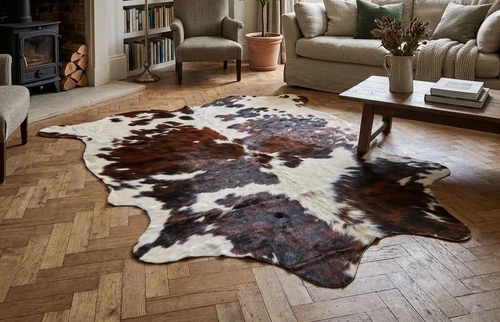
How to Style a Room with a Cowhide Rug: Natural Character, Beautifully Placed
Posted by Nick Pole on 13th Nov 2026
A cowhide rug can change the feel of a room without taking it over. Its natural shape softens straight lines, its markings introduce pattern, and its texture brings warmth to both contemporary and traditional interiors.
Part of the appeal is that no two hides look exactly alike. From soft creams and warm browns to striking black-and-white markings, each one brings its own character to your home.
That individuality is where our selection begins. Our cowhides come from tanners in Brazil and Colombia, and each hide is hand-picked for its quality and pattern. From the choice of hide to its final position on your floor, the aim is simple: to find a piece that feels right for your room.
The Journey of Your Cowhide: From Tannery to Home
Before a cowhide becomes a feature in your living room, it passes through the hands of tanners who prepare and finish the hide for use in the home. The tanning process preserves the hide while retaining the hair and distinctive markings that give a cowhide rug its appeal.
Our hides are sourced from tanners in Brazil and Colombia. Rather than choosing by colour alone, we hand-pick each hide for both quality and pattern. The balance of markings matters: a bold patch of dark colour, a scattering of speckles or a softer blend of natural tones can create quite different effects.
That selection makes choosing your rug a more personal experience. You are not simply picking a repeating design from a roll; you are choosing an individual hide with its own outline, colouring and character.
Once it reaches your home, the next part of its journey is finding the place where those qualities can shine.
Start with the Colours Already in Your Room
A good starting point is to look at your largest pieces: the sofa, flooring, curtains and main furniture. Your cowhide does not need to match them exactly, but choosing a hide that echoes one or two existing colours helps the room feel connected.
-
Black-and-white hides introduce contrast and work particularly well where you want the rug to become a focal point.
-
Brown-and-white hides bring warm, earthy colour alongside timber furniture, leather seating and neutral upholstery.
-
Lighter hides create a gentler effect in rooms styled with cream, pale wood and natural fabrics.
-
Speckled or strongly marked hides add interest where the rest of the room is relatively simple.
Think about contrast as well as coordination. A pale hide can stand out beautifully on a dark floor, while deeper brown markings can give definition to a light, neutral room.
Give It Space in the Living Room
In a living room, try placing the cowhide in front of the sofa, with part of it extending beneath the coffee table. Leave enough of the outline visible to appreciate its natural shape.
There is no need to line every edge up with the furniture. A slight angle can make the arrangement feel more relaxed, particularly in a room dominated by rectangular sofas, cabinets and tables.
Let the pattern guide the position, too. If your hide has a particularly attractive patch or distinctive marking, keep that area visible rather than hiding it beneath a large piece of furniture.
Before settling on a position, turn the hide around and view it from the doorway and your usual seat. The same rug can look surprisingly different when its orientation changes.
Layer It for a Softer, More Defined Look
A cowhide can also sit over a larger rug, creating a layered arrangement that combines a clear seating area with an individual finishing touch.
Try a simple wool or flatwoven rug underneath, then place the cowhide slightly off-centre. Keep the lower rug relatively understated so that the two patterns do not compete.
This approach is especially useful when you like the character of a cowhide but want a larger area of flooring covered. The base rug provides the overall frame, while the hide introduces shape and contrast. Make sure both layers lie flat and use suitable rug underlay where needed to help prevent movement.
Make a Bedroom Feel More Inviting
A cowhide does not have to sit in the centre of a room. Beside a bed, it can create a pleasing detail that you notice first thing in the morning.
Try positioning it partly beneath the lower corner of the bed, allowing the rest of the hide to spread into the room. This often feels less formal than a symmetrical arrangement.
For a calm bedroom, choose markings that sit comfortably with your bedding and curtains. If the room is very plain, a more distinctive hide can provide the main decorative feature without adding extra furniture or accessories.
Create a Reading Corner with Character
An armchair, a side table and a lamp can feel like a complete little space when brought together with a cowhide rug.
Place the hide beneath the front of the chair, leaving its outline visible around the seating area. Pair it with a knitted throw, linen cushion or leather upholstery for a mix of textures.
This is also a useful way to introduce cowhide into a room without making it the centrepiece of the whole space.
Balance Pattern with Simplicity
A distinctive cowhide rarely needs lots of competing decoration. If the hide has bold markings, give it some breathing room with plain upholstery and a restrained colour palette.
If you enjoy a more collected interior, connect different pieces through colour rather than trying to match every pattern. A brown marking in the hide might pick up the tone of a wooden cabinet, while a cream section echoes a lampshade or cushion.
The result should feel considered, not coordinated to perfection.
Choose the Individual Hide, Not Just the Style
When choosing your cowhide, consider its measurements, outline and the placement of its markings—not just whether it is described as brown, black or cream. Check how its widest points will sit alongside your furniture and how much of the pattern will remain visible.
Our cowhides begin with tanners in Brazil and Colombia, with each hide hand-picked for quality and pattern. Styling one at home is about continuing that attention to detail: choosing the right position, allowing its natural shape to show and making its individual markings part of the room.
Whether placed beneath a coffee table, layered over a larger rug or tucked beside a favourite chair, a well-chosen cowhide brings something personal to the space.